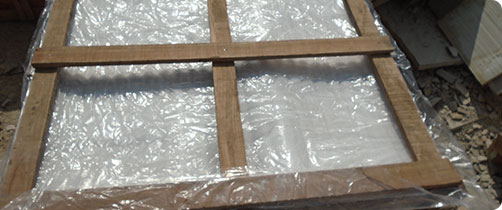
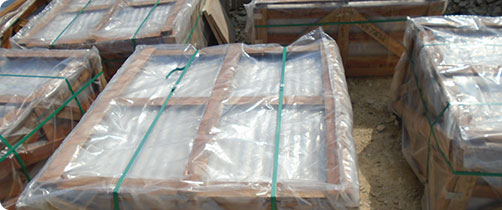
At Marbella Surfaces, we give utmost importance to secure and professional packing to ensure the safe transit of imported marble and natural stone products. Although stone is inherently strong, it requires careful handling during loading, transportation, and unloading—especially across long-distance road and sea routes.
From factory dispatch to final delivery, our stones are packed using robust, industry-approved materials and methods to minimize damage and ensure they arrive in perfect condition, anywhere in India or worldwide.
Our 6-Step Packaging Process
At Marbella Surfaces, quality extends beyond stone selection and processing — it continues through careful packaging. Our structured 6-step packaging process is designed to protect every marble slab and natural stone surface from handling and transit-related damage.
From crate preparation to final sealing, each step is executed with precision to ensure the consignment reaches the site in flawless condition, preserving the stone’s quality, finish, and integrity.
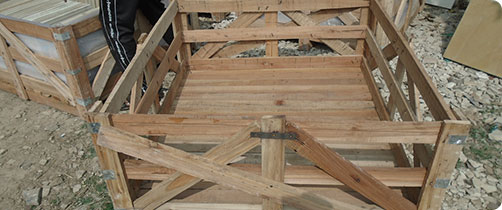
CRATE SETUP
These highly reinforced seaworthy wooden crates are manufactured using solid eucalyptus wood which ensures sturdiness, flexibility, and safety for the packed natural stones inside.
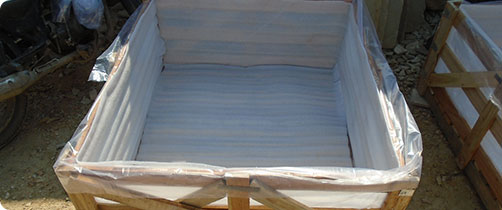
CRATE PREPARATION FOR STONE PACKAGING
The next step is to secure the inner part of the crate by using a polythene and foam sheet on all sides which helps in preventing the damage of stone edges.
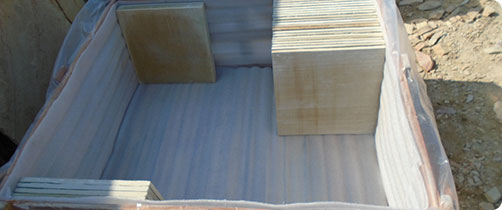
PLACING THE NATURAL STONE PRODUCTS IN THE CRATE
Now, the natural stone tiles are systematically put in the crate to ensure the maximum utilization of the available space.
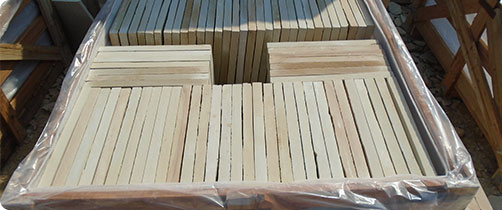
FILLING THE CRATE WITH NATURAL STONE TILES
Once a filling pattern is fixed, all the tiles are placed tightly in the crate to avoid damage. In case of gaps, foam sheets are used to secure the tile surfaces from getting damaged.
SECURING THE CRATE
After the crate is filled, the next thing is to secure the packed products by putting a foam sheet and polythene sheet on top of the crate. This helps in avoiding any kind of accidental damage during transit. Also, the crates are chemically treated and fumigated before dispatch.
SEALING THE CRATE
Eventually, the crate is sealed by fixing the upper part using nails. Another layer of polythene sheet is used from the outside to prevent exposure to the sun, water, and cold. Packaging straps are used to secure the crate from all sides.